Asphalt Paving in Orlando, FL
New asphalt built from the ground up -- private roads, HOA streets, church and school drives, and commercial access drives -- starting with the sand underneath and finishing with a surface shaped to shed Central Florida rain.
Call (689) 336-1895 for a Free Estimate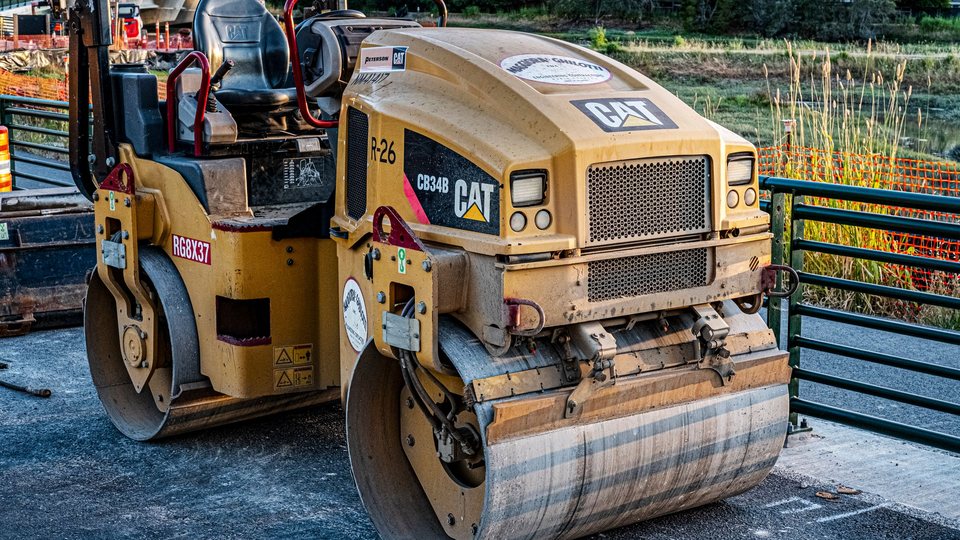
This page is about building asphalt where none exists, or removing a failed road or drive down past its base and building it again. That is a different job from sealing or patching. A fresh coat on top cannot rescue a street whose foundation has given out, and a thin overlay on a base that is pumping water will crack along the same lines within a season or two. When the structure is gone, the only honest fix is to rebuild the structure.
Most of what decides how long new asphalt lasts is finished before the first load of hot mix arrives. The soil under the road, the way it is stabilized, the thickness and compaction of the base, and the slopes that move water off the surface all get buried. Nobody sees them once the black top is down, which is exactly why they are where shortcuts hide. A smooth, dark surface on day one says very little about year eight.
The owners who call about this kind of work tend to be HOA boards with aging community streets, church facilities committees, school business offices, and commercial landowners who need a drive connecting a building to the public road. If that describes your property, call and we'll walk the site, look at what is underneath where we can, and talk through the layers a sound proposal should spell out.
Start With the Ground: Subgrade on Central Florida Sand
Much of Orange County sits on fine sand. Sand drains quickly, which helps, but it has almost no cohesion. Unconfined, it shoves sideways under a wheel load, and a road built straight on loose sand develops ruts and edge breaks long before the asphalt itself wears out. The subgrade has to be treated as a structural layer, not just the dirt that happens to be there.
Preparation starts with removal. Organic muck, old root masses, buried construction debris and pockets of clay all have to come out, because each one either compresses over time or holds water. Muck is common near lakes, wetlands and former pasture, and it can run deeper than anyone expects until an excavator finds the bottom. It gets replaced with clean fill placed and compacted in layers rather than dumped in one pass.
Before any base goes down, a good contractor proof-rolls the subgrade with a loaded truck or heavy roller and watches for pumping, cracking or soft spots that deflect under the wheels. Those areas get dug out and corrected on the spot. Moisture matters too: sand compacts best within a moisture range, so bone-dry sand in May and saturated sand in August both need attention before rollers can do their job.
Stabilizing Sand So the Base Has Something to Stand On
Public road specifications in Florida commonly call for a stabilized layer between natural sand and the base course, and private roads that carry trucks benefit from the same thinking. Stabilization raises the bearing strength of the top of the subgrade so the base does not punch down into it.
The usual methods are mechanical blending, where crushed limerock, shell or recycled material is mixed into the upper subgrade and compacted; soil-cement, where cement is blended into the sand to form a stiff platform; and geotextile or geogrid fabric laid between sand and base to keep the two from migrating into each other. Which one fits depends on the soil, the water table and the traffic. On larger projects a geotechnical report with soil borings should guide the choice, and a proposal ought to name the method rather than just saying the site will be prepared.
The Base Course: Limerock, Crushed Concrete and Soil-Cement
Limerock has been the traditional Florida base material for generations. It compacts into a hard, tight layer and performs well as long as it stays reasonably dry. Its weakness is water: saturated limerock loses much of its strength, which is one more reason drainage design is not optional here. Crushed concrete aggregate is a widely used recycled alternative, and soil-cement bases show up where a rigid platform makes sense.
Base thickness should be sized to the traffic, not picked from habit. A church drive that sees cars all week and a few buses on Sunday needs less than an HOA street carrying weekly garbage trucks, moving vans and years of construction traffic while homes are still going up. The base is compacted in lifts, checked for density, and graded to the same slopes the finished surface will follow. A prime coat is typically sprayed on the finished base to seal it and help the first layer of asphalt grip.
Hot-Mix Lifts, Rolling and the Joints Nobody Talks About
Asphalt for a road or drive usually goes down in two lifts: a structural lower course and a finer surface course on top. A tack coat between them makes the layers act as one piece instead of two slabs sliding over each other. A self-propelled laydown machine spreads each lift to a set thickness and a screed levels it, with rollers following close behind.
Compaction has to happen while the mix is still hot enough to move. Breakdown rolling seats the material, intermediate passes build density, and finish rolling removes marks. Under-compacted asphalt looks fine at first but lets air and water into the mat, and it oxidizes and ravels years ahead of schedule. Central Florida heat gives crews a longer working window than colder regions get, but an afternoon thunderstorm arriving mid-lift can still stop work and leave a cold joint.
Joints are the quiet weak point. Longitudinal seams between passes should sit outside the wheel paths, be rolled tight, and be tacked where hot meets cold. After the last roller leaves, fresh asphalt stays soft for days in summer heat, so sharp turning, parked trailers and kickstands can scar it. Keeping traffic light early pays off for years.
Grading for Drainage Before a Drop of Rain Falls
Central Florida is flat, so water will not find its own way off a road. Every foot of slope has to be designed: a crown or cross slope on streets, a consistent fall toward inlets, swales or the retention pond, and no low spots where two slopes meet. Standing water softens the base, and on limerock that damage is quick.
Grading also means tying new asphalt into what is already there -- existing curbs, sidewalks, garage floors, gutter lines and the edge of the public road -- without trapping water against a building or sending it into a neighbor's lot. Modern grade control on the equipment helps hold those elevations precisely. When a project adds new impervious area, expect stormwater review before construction; that step belongs in the schedule from the start, not as a surprise halfway through.
Private Roads, HOA Streets, and Church and School Drives
Every property type loads asphalt differently. HOA streets take garbage and recycling trucks on fixed days, delivery vans daily, and school buses at the entrance. Cul-de-sacs suffer from trucks turning tight, and gated entries concentrate every vehicle into one narrow lane. Rebuilding a community street means planning resident access section by section, posting notice well ahead, and keeping emergency vehicles able to reach every home.
Churches and schools have their own rhythm. A church drive may sit almost empty all week and then carry buses, funeral processions and a full parking crowd within a few hours. School bus loops need a heavier section than car-line lanes, and the summer break that frees up the campus lands squarely in the rainy season, so the schedule needs slack for storm days. Commercial access drives, meanwhile, often connect to a public road, and that connection generally has to go through whichever agency owns the road before anyone cuts into its edge.
When Full Reconstruction Beats Another Overlay
Overlays are the right call when the structure underneath is sound. The signs that it is not are fairly consistent: interconnected cracking across whole lanes, ruts that return after being filled, fine material pumping up through cracks after rain, and depressions that keep spreading. Streets that have had overlay stacked on overlay may also have lost most of their curb reveal, so water now spills across sidewalks instead of running to the inlets.
Cores or test pits show how thick the existing asphalt and base really are and whether the base is wet or contaminated with sand. From there, the options run from removing and hauling off everything down to subgrade, to full-depth reclamation, where the old asphalt is pulverized and blended into a new stabilized base in place. Reclamation can cut trucking and reuse material already on site, but it only makes sense where the depth and soil suit it.
Budgeting a new road or a rebuild? The Orlando asphalt paving cost guide lays out published ranges and what moves them. If the project is a customer or tenant lot rather than a road or drive, see parking lot paving.
What’s Included
- Site walk and review of soil, drainage patterns and existing layers
- Removal of muck, roots, debris and failed asphalt where present
- Subgrade proof-rolling and correction of soft areas
- Stabilization method matched to the sand and water table
- Limerock, crushed concrete or soil-cement base compacted in lifts
- Prime and tack coats between base and each asphalt lift
- Hot-mix structural and surface courses rolled to density
- Grading tied into curbs, inlets, swales and retention areas
- Access and phasing plan for residents, congregations or campuses
Why It Matters in Orlando
Building asphalt in the Orlando area means dealing with three local facts at once. The sand under most sites needs stabilizing before it can carry a base. Close to fifty inches of rain in a typical year, the bulk of it in short summer afternoon downpours, punishes any road without real slope and punishes limerock that stays wet. And the region sits on karst limestone, so an unexplained depression uncovered during excavation deserves a professional evaluation before anything is built over it. Add the steady construction traffic in growing communities from the I-4 corridor out toward SR 417, and the case for a properly engineered section, rather than a thin layer over whatever is there, becomes hard to argue with.
Asphalt Paving in Orlando — FAQ
How long does a new asphalt road last in Central Florida?
There is no single number, because lifespan follows the parts you cannot see. A road with a stabilized subgrade, a base sized for its truck traffic, dense compaction and good drainage can serve for decades with routine sealing and crack repair along the way. The same surface laid over soft sand with water standing at its edges may start failing in a handful of years. Heat and UV age the top layer here, but water in the base is what usually ends a road early.
Can new asphalt be installed during Orlando's rainy season?
Yes, but the schedule has to respect the weather. Summer storms tend to build in the afternoon, so crews working June through September usually start early and plan to have base work compacted and asphalt rolled before the clouds arrive. Rain on an open, uncompacted base or in the middle of a lift can force rework. Build weather days into any timeline and ask how the contractor protects exposed base overnight when a storm is forecast.
What should an HOA board ask before rebuilding community streets?
Ask for the section in writing: the stabilization method, base material and thickness, and the number and thickness of asphalt lifts. Ask whether cores or test pits will confirm what is under the existing streets. Ask how residents will get in and out during each phase, how trash pickup and emergency access will be handled, and how notice will reach owners. Finally, ask how curb reveal and inlet elevations will be preserved so the new surface actually drains.
Do I need a permit to build a new private road or access drive?
Often, and the answer depends on where the property sits. The City of Orlando, the other cities in Orange County, and the county itself for unincorporated land each run their own permitting offices. Projects that add impervious area generally trigger stormwater review, and a drive connecting to a public road usually needs approval from the agency that owns that road. Confirm the requirements with the right jurisdiction before a start date is set.
Is soil-cement or limerock better as a base under asphalt?
Each has a place. Limerock is the familiar Florida choice, compacts hard, and is easy to regrade, but it weakens when it stays saturated, so it depends on good drainage. Soil-cement creates a stiffer platform that tolerates moisture better and can reduce the imported material a job needs, though it can develop shrinkage cracks that reflect up through thin asphalt. The soil report, water table and expected truck traffic should drive the decision, not habit.
How soon can cars and buses drive on newly installed asphalt?
Light vehicles can generally use a new surface once it has cooled, often later the same day or the next morning. Heavier traffic and tight turning are harder on young asphalt, especially in summer, when the mat stays soft for days. On a church or school drive, try to keep buses and delivery trucks off for a bit longer and ask drivers to avoid turning their wheels while stopped. Parked trailers and stands can leave dents that stay for good.
Other Services
- Parking Lot Paving in Orlando
- Asphalt Sealcoating in Orlando
- Parking Lot Striping in Orlando
- Asphalt Repair in Orlando
Areas We Serve
- Asphalt Paving in Orange County
- Asphalt Paving in Winter Park
- Asphalt Paving in Apopka
- Asphalt Paving in Ocoee
- Asphalt Paving in Kissimmee
- Asphalt Paving in Sanford
Wondering what the job runs? See what asphalt paving and parking lot work costs in Orlando.
Free Asphalt Paving Estimate in Orlando
Free, no-obligation estimates across Orange County. Tell us about your lot, drive or property.
Call (689) 336-1895