Asphalt Sealcoating in Orlando, FL
Sealcoating for asphalt parking lots, drive lanes and community streets -- cleaned, primed, crack-filled and coated on a schedule that works around afternoon storms and business hours.
Call (689) 336-1895 for a Free Estimate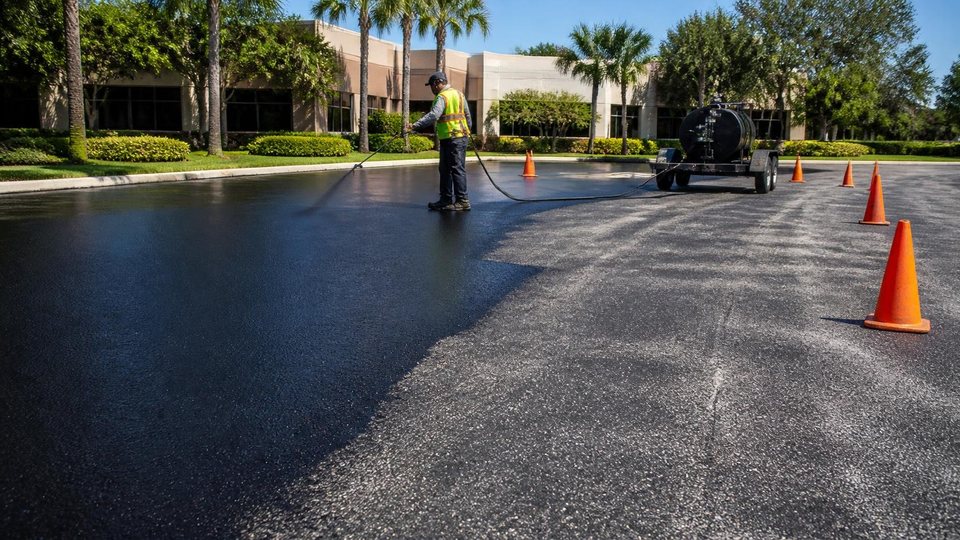
To be clear up front: this is sealcoating of asphalt, the black surface on parking lots, drive aisles and private streets. It is not sealing brick, interlocking brick or concrete hardscape around a pool deck or entry plaza. Those are different materials with different products, and a sealer made for one should never be put on the other.
A sealcoat is a thin protective layer, not a structural one. It does not add strength, level low spots or hold together asphalt that has already broken up. What it does is shield the asphalt binder -- the glue holding the stone together -- from sun, water and automotive fluids, so the surface stays flexible and tight longer. Applied at the right time on sound asphalt, it is the least expensive way to slow the aging of a lot. Applied to a surface that is already breaking apart, it mostly makes the damage harder to see for a few months.
Property managers, retail center owners, apartment communities, office parks, churches and HOAs are the usual callers. If your lot has faded from black to gray and the stone is starting to show, call and we'll look at whether it is a good candidate for a coat or needs repair work first.
What Florida Sun and Heat Do to Unsealed Asphalt
Asphalt binder is a petroleum product, and ultraviolet light and heat break it down through oxidation. You can watch it happen: fresh asphalt is deep black, and within a few years of Central Florida sun it turns gray and chalky. That color change is the binder drying out and getting brittle.
As the binder hardens, the fine material between the larger stones loosens and washes away in heavy rain. The surface texture grows rough, tiny voids open up, and water finds its way deeper each storm season. Hairline cracks appear and widen. Gasoline, motor oil and transmission fluid dripping in stalls and drive-thru lanes soften the binder from the other direction. A sealcoat slows all of this by putting a sacrificial layer between the weather and the asphalt that actually carries the traffic.
Cleaning and Prep Decide Whether the Coat Sticks
Sealer will not adhere to dust, sand, grass clippings or loose stone, and most early peeling traces back to a dirty surface. Prep typically starts with blowers and power brooms across the whole lot, then detail work along curbs, islands and wheel stops, where sand and debris pile up. Grass and weeds growing along edges and through cracks get cut out or treated so the coat reaches the asphalt.
Florida adds a few extra steps. Shaded corners under oak canopies and along north-facing buildings often grow mildew or algae, which needs scrubbing or washing off, and a washed surface must dry completely before any sealer goes down. Irrigation is the other one. Sprinkler heads that overspray the lot have to be shut off or adjusted ahead of time, because a single early-morning watering cycle can ruin a fresh coat along an entire landscape strip.
Oil Spots and Cracks Get Handled Before Any Sealer
Oil-saturated areas repel water-based sealers. Where drips have soaked in -- parking stalls, drive-thru windows, dumpster pads where trucks leak hydraulic fluid -- loose residue is scraped away and a dedicated oil-spot primer is applied so the coat can grip. Spots that have softened the asphalt into a mushy patch are past priming and need to be cut out and repaired.
Cracks come next. Sealer is a coating, not a crack filler, and it will simply sag into any crack wider than about a quarter inch and reopen within weeks. Those cracks should be cleaned out and filled with a hot-pour or other crack material and allowed to set before the lot is coated. Potholes, broken edges and alligator-cracked sections belong to repair work first; coating over them just paints the problem.
Choosing a Sealer: Asphalt Emulsion, Refined Tar and Polymer Blends
Most commercial sealers fall into a few families. Asphalt emulsion sealers use asphalt cement suspended in water; they are widely available and lower in odor. Refined coal-tar emulsions have long been valued for resisting gasoline and oil, but they have drawn environmental and health scrutiny and some places restrict them, so ask what product is being proposed. Acrylic and polymer-modified sealers use synthetic binders or additives to improve flexibility, wear and color.
Nearly every sealer is mixed on site with water, silica sand or another aggregate for traction and wear, and sometimes additives that speed drying. The manufacturer publishes the mix ratio and coverage rate, and a proposal should name the product and follow that sheet. Watering a sealer down beyond its spec makes it spread farther and look identical for the first week, then wear through in high-traffic areas long before it should.
Two Coats Where Traffic Turns and Brakes
Wear is not even across a lot. Entrances, drive aisles, drive-thru lanes and the turning areas in front of anchor stores see thousands more tire passes than a back row of stalls. Tires scrub a coat hardest where cars turn, stop and accelerate. For that reason, a common commercial spec calls for two coats in drive lanes and high-traffic zones, even where parking stalls receive one.
The first coat is often worked into the surface texture with squeegees, which pushes sealer into small voids, and the second is sprayed for an even film. Each coat needs to dry before the next goes on. When you compare proposals, look for how many coats go where, the application method, and the coverage rate -- vague language like apply sealer to lot leaves all three open to interpretation.
Cure Time, Afternoon Storms and Keeping a Business Open
Sealer needs a dry surface, warm air and ideally sun to cure. In Orlando's wet season the usual pattern is clear mornings and storms building after lunch, so crews start early to give the coat time to skin over before the clouds arrive. Rain on an uncured coat can wash sealer into gutters and leave streaks, so a watchful eye on radar is part of the job. Dry season brings more reliable weather, but cool, humid nights slow curing.
Plan on keeping traffic off a fresh coat for 24 to 48 hours, depending on temperature, humidity and product. For a business that cannot close, the lot is split into sections and coated in phases, often starting overnight or on the slowest day of the week, with barricades, cones and signs routing customers to finished areas. Tenants should get written notice with dates and which areas close when, and delivery schedules and trash pickup need moving so trucks do not roll across wet sealer.
How Often to Reseal, and What Over-Sealing Does
For most commercial lots the working cadence is a fresh coat every two to three years, adjusted for traffic and sun exposure. A busy grocery-anchored center may need attention sooner in its drive lanes, while a lightly used office lot can stretch toward the longer end. New asphalt should be left to cure for several months before its first coat, so the oils near the surface have time to settle.
More is not better. Sealing every year builds a thick skin that cannot flex with the asphalt beneath it, and that skin eventually crazes into a fine web of cracks and flakes off in sheets. Thick buildup also gets slick when wet. The better test is wear, not the calendar: when the stone texture shows through in the drive lanes and the surface has faded, it is time; while the last coat is still intact and black, it is not.
Once the coat cures, fresh lines go back down on top of it; see parking lot striping. For published per-square-foot ranges, the Orlando asphalt paving cost guide lists them.
What’s Included
- Walk-through to confirm the asphalt is sound enough to coat
- Blowing, power brooming and edge detailing along curbs and islands
- Removal of weeds, mildew and algae from edges and shaded areas
- Oil-spot scraping and primer on fluid-soaked stalls and pads
- Crack cleaning and filling ahead of the sealer
- Sealer mixed to the manufacturer's ratio with sand for traction
- Two coats in drive lanes and high-traffic zones
- Phased sections, barricades and signage to keep the property open
- Coordination of irrigation shutoff and tenant notice before work
Why It Matters in Orlando
Few climates are harder on exposed asphalt binder than Central Florida's. Year-round sun oxidizes a lot faster than in places with long gray winters, and summer surface temperatures keep the binder soft and vulnerable to fluid drips. The wet season delivers roughly fifty inches of rain a year in concentrated bursts that strip loosened fines from unsealed lots. Meanwhile, Orlando's hotels, restaurants and retail along corridors like I-4 and SR 50 rarely have a quiet day, so coating plans here lean heavily on phasing, early starts and a close watch on the afternoon forecast rather than simply closing the lot for a weekend.
Asphalt Sealcoating in Orlando — FAQ
How long after sealcoating can cars park on an Orlando lot?
Plan on 24 to 48 hours before normal traffic returns. Foot traffic can sometimes cross sooner, but vehicles turning their wheels on a soft coat leave scuffs that stay visible. Hot, sunny, breezy days shorten the wait; cloudy, humid days and overnight application stretch it. Heavy trucks and dumpster service should stay off the longest. Keep barricades up until the coat is firm to a thumb press and does not transfer to shoes.
What happens if it rains right after sealcoating?
It depends on how far the cure has gone. A coat that has skinned over for a few hours usually survives a shower with little more than light spotting. A downpour on a freshly applied coat can wash sealer off the surface, leaving streaks, bare patches and residue in gutters and drains. Contractors in this area generally watch radar closely and stop or reschedule when a storm looks likely. Ask how a washed-out section would be handled before the job starts.
Is sealcoating worth it on an old, cracked parking lot?
Only if the asphalt underneath is still structurally sound. Scattered linear cracks can be filled and then coated, and that combination buys time. A lot with widespread alligator cracking, potholes, soft spots or crumbling edges is past the point where a coating helps; it needs repair or a bigger rebuild first. Spending the maintenance budget on a black coat over failing asphalt makes the property look better for a season while the real problem keeps growing underneath.
Can sealcoating be done at night for a restaurant or hotel?
It can, and hospitality properties often ask for it. The trade-off is curing speed. Without sun and with higher overnight humidity, sealer dries more slowly, so a section coated at night may not be ready for traffic by morning. A common compromise is to start very early, coat one section at a time, and keep a clear, signed route open to the entrance and any drive-thru. Ask for a written phasing sketch showing what closes and when.
Why does sealcoat peel or flake off some lots?
Peeling usually comes down to one of a few causes. Sealer applied over dust, sand or an oily spot never gripped the asphalt. Sealer applied too thick, or year after year until layers built up, cracks and sheds as it ages. Over-diluted material wears through quickly in drive lanes. Rain or irrigation hitting the coat before it cured can also leave weak areas. Good prep, the right mix ratio and a sensible reseal interval prevent most of it.
Does sealcoating make a parking lot slippery?
A properly mixed sealer includes sand or another fine aggregate for traction, so a normal coat should not be noticeably slick. Problems show up when sand is left out of the mix, when too many coats build a smooth glossy skin, or when a lot is sealed so often that the surface texture disappears. On sloped entrances and pedestrian crossings, ask that the sand loading follow the manufacturer's recommendation, and walk the lot after the first rain to check.
Other Services
- Asphalt Paving in Orlando
- Parking Lot Paving in Orlando
- Parking Lot Striping in Orlando
- Asphalt Repair in Orlando
Areas We Serve
- Asphalt Sealcoating in Orange County
- Asphalt Sealcoating in Winter Park
- Asphalt Sealcoating in Apopka
- Asphalt Sealcoating in Ocoee
- Asphalt Sealcoating in Kissimmee
- Asphalt Sealcoating in Sanford
Wondering what the job runs? See what asphalt paving and parking lot work costs in Orlando.
Free Asphalt Sealcoating Estimate in Orlando
Free, no-obligation estimates across Orange County. Tell us about your lot, drive or property.
Call (689) 336-1895