Parking Lot Striping in Orlando, FL
Fresh lines tell drivers where to park, where to walk and where not to stop. Here is how striping works on an Orlando lot -- layout, accessible spaces, fire lanes, paint choices and published price ranges -- and what to settle before the first line goes down.
Call (689) 336-1895 for a Free Estimate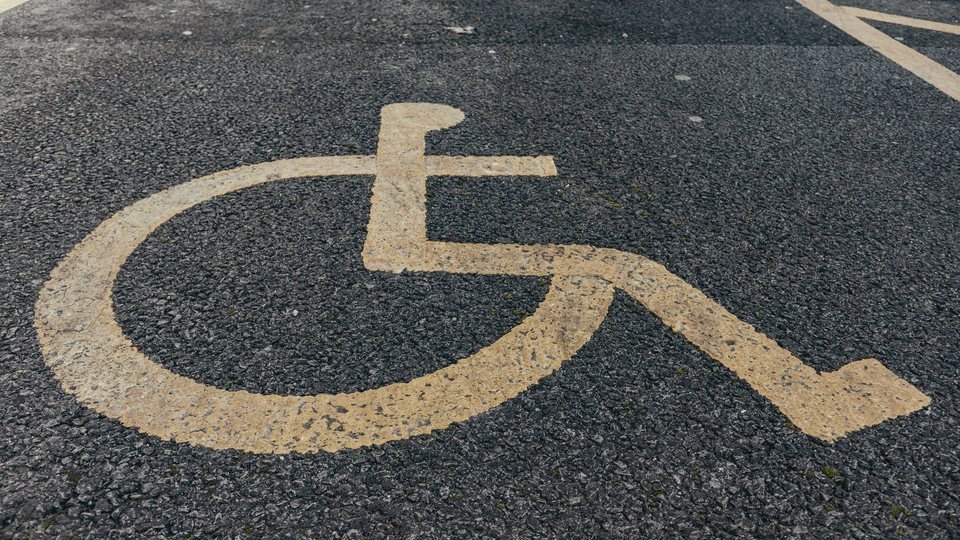
Parking lot striping looks like the simplest job on a commercial property, and on a lot whose lines are only faded, it can be. A striping machine follows the old marks, lays fresh paint over them, and the lot reopens the same day. The trouble starts when the lines are gone, the layout never worked, the accessible spaces no longer match the count the lot requires, or the fire department wants a lane marked differently. At that point striping becomes a small design project, and the paint is the easy part.
For an Orlando property manager the stakes are practical. Lines that have baked out in the sun push drivers to park crooked and waste spaces. Missing arrows send cars the wrong way down one-way aisles. An accessible space without a proper access aisle or sign is a compliance problem and a hazard for the people who need it. And every time a lot is sealcoated, every line on it disappears under the new coat and has to be put back.
What follows covers what a striping job includes, how to tell whether your lot needs a restripe or a new layout, how accessible parking is counted under the federal standard, why fire-lane rules come from your local fire authority, and how waterborne paint compares with thermoplastic. Published price ranges sit near the bottom, along with what a striping proposal should spell out.
Restripe or New Layout: Which Job Does Your Lot Need?
A restripe traces what is already there. If the stall lines, arrows and legends are still visible enough to follow, and the layout itself works for the property, the lines are blown clean, the machine runs along the existing marks and fresh paint goes down at the same width. It is quick, it rarely needs drawings, and on most lots it fits into a single night or a weekend morning.
A new layout starts from a blank or nearly blank surface. That happens after a new lot is built, after an overlay, after a sealcoat where nobody marked the old lines first, or when an owner wants the lot drawn differently. Layout means measuring the lot, confirming the total stall count and the accessible-space count, snapping chalk lines or spotting paint dots, and checking the result against the approved site plan before permanent paint goes down. It takes longer and costs more because most of the work is measuring and checking, not spraying.
There is a middle case that catches owners out. A lot sealcoated without anyone marking the ends of the old lines has lost its layout, even though nothing about the design changed. Before any sealcoat, the ends of stall lines, the positions of arrows and the corners of accessible spaces should be tick-marked at the curb or pavement edge so the lot can be restriped exactly as it was.
Stall and Aisle Layout at a General Level
Stall width, stall depth, stall angle and drive-aisle width work together, and changing one changes the others. Stalls set at ninety degrees to the aisle fit the most cars into a given run and work with two-way traffic, but they need the widest aisles because drivers swing fully into the space. Angled stalls let drivers pull in with a gentler turn, which allows a narrower aisle, but that aisle then has to run one way, and directional arrows become essential rather than decorative.
Minimum stall and aisle dimensions come from local zoning and land-development codes, and they are not the same in every Central Florida jurisdiction. The approved site plan for your property usually shows the dimensions the lot was permitted with. A layout should follow that plan, or the current local code where the plan is missing, rather than a rule of thumb carried in from somewhere else.
Good layout also considers who actually parks there. A medical office with many older patients benefits from generous stalls near the door. A restaurant with a drive-through needs its stacking lane marked so waiting cars do not block the parking aisles. A property full of pickups and work vans may want roomier end stalls, and compact-only stalls, where the local code allows them at all, should be clearly labeled so full-size vehicles stop squeezing into them.
Arrows, Fire Lanes and Loading Zones
Directional arrows, stop bars, crosswalks and painted legends such as STOP, NO PARKING or ONE WAY control how traffic moves between the entrance, the aisles and the building. Arrows belong at aisle entrances and at every point where a driver might pick the wrong direction, and they need to be large enough to read from a moving car. A stop bar at the exit and a marked pedestrian crossing in front of the main door do more for safety than almost any other paint on the lot.
Fire lanes are different, because the rules are not the owner's or the striper's to choose. Marking requirements for fire lanes -- where the lane runs, its color, the wording of any painted legend, the size and spacing of lettering, and whether signs are needed along it -- are set by the local fire authority for the jurisdiction the property sits in. Confirm the current requirements with the fire marshal's office before painting, and note who you spoke with and when. A fire lane painted to an outdated or guessed standard may have to be redone after an inspection.
Loading zones need room for the truck and for the door. A marked loading zone should keep the full length of a delivery truck clear of stalls, show which way the truck approaches, and put a painted no-parking area in front of the dock door or service entrance so a parked car cannot block it. At retail centers, marking a separate service lane behind the building keeps box trucks out of customer aisles during business hours.
Accessible Parking: Counts, Van Spaces, Access Aisles and Signs
The number of accessible spaces a lot needs comes from table 208.2 of the 2010 ADA Standards for Accessible Design, and it scales with the total number of spaces in the parking facility. A lot with 1 to 25 spaces needs 1 accessible space; 26 to 50 needs 2; 51 to 75 needs 3; 76 to 100 needs 4; 101 to 150 needs 5; 151 to 200 needs 6; 201 to 300 needs 7; 301 to 400 needs 8; and 401 to 500 needs 9. Larger lots follow a percentage-based formula in the same table, and outpatient medical and rehabilitation facilities carry higher requirements under the same section of the standard.
Of the accessible spaces required, at least 1 of every 6 must be van-accessible, and a partial group of six still calls for another van space. So a lot that needs anywhere from one to six accessible spaces needs at least one van space. A van space needs extra room for a side-mounted ramp or lift, provided either by a wider stall or by a wider access aisle beside it.
Every accessible space needs a marked access aisle next to it, and two accessible spaces can share one aisle between them. The aisle is where a ramp deploys and where a wheelchair user gets in and out, so it has to stay clear -- the hatch lines exist to stop people parking in it. The space and aisle need to be nearly level, the aisle must connect to an accessible route to the entrance, and the spaces belong on the shortest practical route to that entrance. The standard sets minimum widths for stalls and aisles, so draw the layout from its current text rather than copying faded lines already on the pavement.
Each accessible space also needs a sign showing the International Symbol of Accessibility, mounted high enough that a parked vehicle does not hide it, and van spaces need an added van-accessible designation. Florida layers its own requirements for accessible parking signs and markings on top of the federal standard, so a restripe is a good moment to check the signs and posts against current state requirements as well as the paint.
Waterborne Paint vs Thermoplastic
Most parking lot striping uses waterborne acrylic traffic paint. It sprays from a walk-behind or ride-on striper, dries fast enough in good weather to reopen a section quickly, has low odor and solvent content, and sits well on sealcoat -- which matters, because a sealed lot gets restriped every time it is sealed. It is also the least expensive marking material. The trade-off is wear: at entrances, in drive lanes and wherever tires turn, waterborne paint thins out much faster than it does in the stalls.
Thermoplastic is a different material altogether. It is a solid compound melted and applied hot, or laid as preformed shapes and fused to the surface with a torch, and it sets into a thick, raised marking that stands up to heavy traffic far longer than paint. Glass beads mixed in or dropped on top reflect headlights at night. It costs more, takes specialized equipment, and it holds best on bare, sound asphalt; laid over sealcoat, it can peel away along with the sealer as that layer wears.
Plenty of lots use both. Paint handles the stall lines, which see little tire wear and get buried at each sealcoat anyway. Thermoplastic goes where wear and visibility matter most: crosswalks, stop bars, entrance arrows, and fire-lane legends if the fire authority accepts it. Reflective beads can also be dropped into fresh waterborne paint to improve nighttime visibility for less than thermoplastic costs.
Restripe Cycles and Night or Weekend Scheduling
Commercial lots are commonly sealcoated every 2 to 3 years, and the whole lot has to be restriped after every sealcoat because the coat covers every marking. That makes the sealcoat cycle the natural restripe cycle for most properties. The lines go down after the sealer has cured, not the same afternoon it was spread, or the paint can track and fail to hold.
Between sealcoats, busy lots often need a touch-up. Entrances, drive-through lanes, fuel-station aprons, loading zones and the first rows by the door fade first. Restriping just those areas, or just the arrows and crosswalks, keeps the lot readable without repainting every stall. A walk through the lot after dark with headlights on shows more about line visibility than a walk at noon.
A restaurant, hotel, grocery-anchored center or medical office cannot give up its lot for a day, so striping is usually scheduled when the lot is emptiest -- overnight, early on a weekend morning, or in sections during the slowest hours. Fast-drying waterborne paint suits that approach: one section is coned off, blown clean, striped and reopened while the next is started. The owner's side needs planning too. Tenants and residents should hear which rows close and when, cars left overnight in apartment and HOA lots have to be moved or worked around, and the lot lights need to stay on. Paint needs a dry surface, so heavy dew on a humid night or puddles from an afternoon storm can push the start time back.
Layout Changes That Add Spaces
Many older lots were laid out once and then traced for decades, and the original design rarely matches how the property is used now. Redrawing the lot can recover spaces: tightening oversized aisles, switching a section between angled and ninety-degree stalls, reclaiming dead corners and old hatched areas, or reorganizing rows that were drawn around a building feature, kiosk or entrance that no longer exists.
Two cautions before any paint goes down. First, a change in stall count or aisle arrangement can affect the approved site plan and the zoning parking requirement, so check with the city or county planning office before striping a different layout. Some Florida cities require a permit even to restripe or reseal a lot, and published sources do not state the rule for Orange County or the City of Orlando, so confirm with the jurisdiction. Second, adding spaces can move the lot into a higher row of table 208.2, which means another accessible space, and possibly another van-accessible space, has to fit into the new layout.
When a layout changes, the old lines have to go. Blacking them out with paint or covering them with a fresh sealcoat is cleaner than leaving ghost lines that confuse drivers, which is why the best time to redraw a lot is right after it has been sealed or resurfaced.
Published Striping Price Ranges and What a Proposal Should List
Published ranges for line striping run 0.20 to 1.00 per linear foot, or 5 to 20 per stall when a job is priced by the space. An accessible stall with its painted symbol is published at 25 to 50 each. These are published ranges, not a quote -- the contractor prices your lot after seeing it.
What moves a striping price: restripe versus new layout, total linear footage, the number of arrows, legends and symbols, any thermoplastic, curb painting, how much cleaning the surface needs, night or weekend scheduling, and whether signs or wheel stops are part of the work. A clear proposal lists the stall count before and after, the number of accessible and van-accessible spaces, the material and color for each type of marking, which markings follow fire authority direction, and whether the surface is cleaned before painting.
Striping is normally the last step after a sealcoat, which has its own page on asphalt sealcoating. To see how striping sits beside sealcoating, crack filling and resurfacing in a property budget, the Orlando asphalt paving cost guide has them worked out.
What’s Included
- A walk of the lot to decide between a straight restripe and a new layout
- Stall count and accessible-space count checked against ADA table 208.2
- Tick-marking existing line ends before a sealcoat so the layout survives it
- Blowing the surface clean before any paint goes down
- Stall lines, directional arrows, stop bars, crosswalks and painted legends
- Accessible stalls with the symbol, hatched access aisles and van-accessible spaces
- Fire-lane markings laid out to the local fire authority's current requirements
- Loading-zone and no-parking markings in front of doors and service entrances
- Waterborne traffic paint, thermoplastic, or a mix chosen by location
- Night, weekend or section-by-section scheduling so the lot stays usable
Why It Matters in Orlando
Orlando lots fade lines faster than lots in cooler climates. Strong sun and heat break down traffic paint along with the asphalt under it, sand blown and tracked in from landscaping and nearby construction scrubs the markings in drive lanes, and an annual rainfall near fifty inches, concentrated in the June-to-September storm window, shrinks the dry working window on summer afternoons, one more reason striping here so often happens at night or early in the morning. The tourism economy adds pressure: hotels, attractions, restaurants and shopping centers along corridors such as I-4, SR 50 and US-441 carry traffic from early morning to late night and have little tolerance for a closed lot. Permitting and fire-lane rules are a patchwork as well. The City of Orlando, Winter Park, Apopka, Ocoee and unincorporated Orange County each have their own offices, Kissimmee sits in Osceola County and Sanford in Seminole County, so confirm permit and fire-lane requirements with the specific jurisdiction before a new layout is painted.
Parking Lot Striping in Orlando — FAQ
How much does parking lot striping cost in Orlando?
Priced by the space, published figures run 5 to 20 per stall; priced by the line, 0.20 to 1.00 per linear foot. Each accessible stall with its symbol is listed at 25 to 50. Where a lot lands depends on whether the work traces existing lines or needs a fresh layout, how many arrows and legends it carries, and whether it happens overnight. Small lots often run into a minimum job charge, so a very small restripe may not scale down in proportion. Treat every figure as a published range; the contractor prices the job.
How many handicap parking spaces does my parking lot need?
It depends on the total spaces in each parking facility. Under table 208.2, a 60-space lot needs 3 accessible spaces and a 180-space lot needs 6, and each needs at least one van-accessible space. When a property has more than one separate lot, the count is figured lot by lot rather than for the whole property. Where a building has several accessible entrances with parking nearby, the accessible spaces should be spread among them instead of grouped in one row. Medical and residential properties have added rules, so read the full standard.
Is a permit required to restripe an Orlando lot?
It can be. Nobody has published the requirement for the City of Orlando or unincorporated Orange County, and a number of Florida cities ask for a permit even for resealing or restriping. Tracing the same layout is generally simpler than a redesign that changes stall counts, moves accessible spaces or reroutes a fire lane, which is the kind of change most likely to draw review. Call the building or planning office for the city, or the county if the property is unincorporated, before the job is scheduled, and write down the answer.
Who decides how a fire lane has to be marked?
The local fire authority for the jurisdiction your property is in, typically through its fire marshal's office. It decides where the lane runs, the color, the legend wording and spacing, and whether signs are required. An existing fire lane is not automatically acceptable just because it was painted that way before, so ask whether it meets current requirements before tracing it. Keep the lane clear of cones, wheel stops and parked cars once the job is done, and get the authority's sign-off before moving a lane.
How long does parking lot line paint last?
It depends on traffic and material. Waterborne paint on stall lines in quiet rows can stay readable until the next sealcoat, while the same paint at an entrance or drive-through lane may fade well before then. Thermoplastic lasts considerably longer in high-wear spots. Strong sun, blown sand and tight turning traffic shorten the life of any marking. Since each sealcoat covers every line anyway, most owners plan a full restripe with each sealcoat and spot-restripe the busiest areas in between.
Can parking lot striping be done at night?
Yes, and for businesses that stay open late it is often the better choice. Night work needs the lot lighting on, portable lights for darker corners, and a plan for cars left overnight. In Central Florida cold is rarely the limit on overnight painting; moisture is. Dew on a humid night or water left from an evening storm can delay the start until the surface dries, so keep a backup night on the calendar. Give tenants and residents written notice of the closed rows and the reopening time.
Do old parking lot lines have to be removed before restriping a new layout?
Yes, if the new lines do not land on the old ones. Leftover lines confuse drivers and can make an accessible aisle or fire lane look like a parking space. Painting over old lines with black marking paint is fast, though the cover coat can wear thin and let ghost lines show. Grinding removes lines but scars the surface. A fresh sealcoat or overlay hides everything cleanly, which is why most layout changes are timed to follow one of those jobs.
Other Services
- Asphalt Paving in Orlando
- Parking Lot Paving in Orlando
- Asphalt Sealcoating in Orlando
- Asphalt Repair in Orlando
Areas We Serve
- Parking Lot Striping in Orange County
- Parking Lot Striping in Winter Park
- Parking Lot Striping in Apopka
- Parking Lot Striping in Ocoee
- Parking Lot Striping in Kissimmee
- Parking Lot Striping in Sanford
Wondering what the job runs? See what asphalt paving and parking lot work costs in Orlando.
Free Parking Lot Striping Estimate in Orlando
Free, no-obligation estimates across Orange County. Tell us about your lot, drive or property.
Call (689) 336-1895